Laser cutting
A focused beam cuts profiles, holes and slots. Material, thickness and cut-edge requirements determine suitability.
Process details ↗From flat drawings to cut panels, brackets and enclosures. Share the material grade, thickness and quantities to discuss cutting, forming and finishing.
Request a quote ↗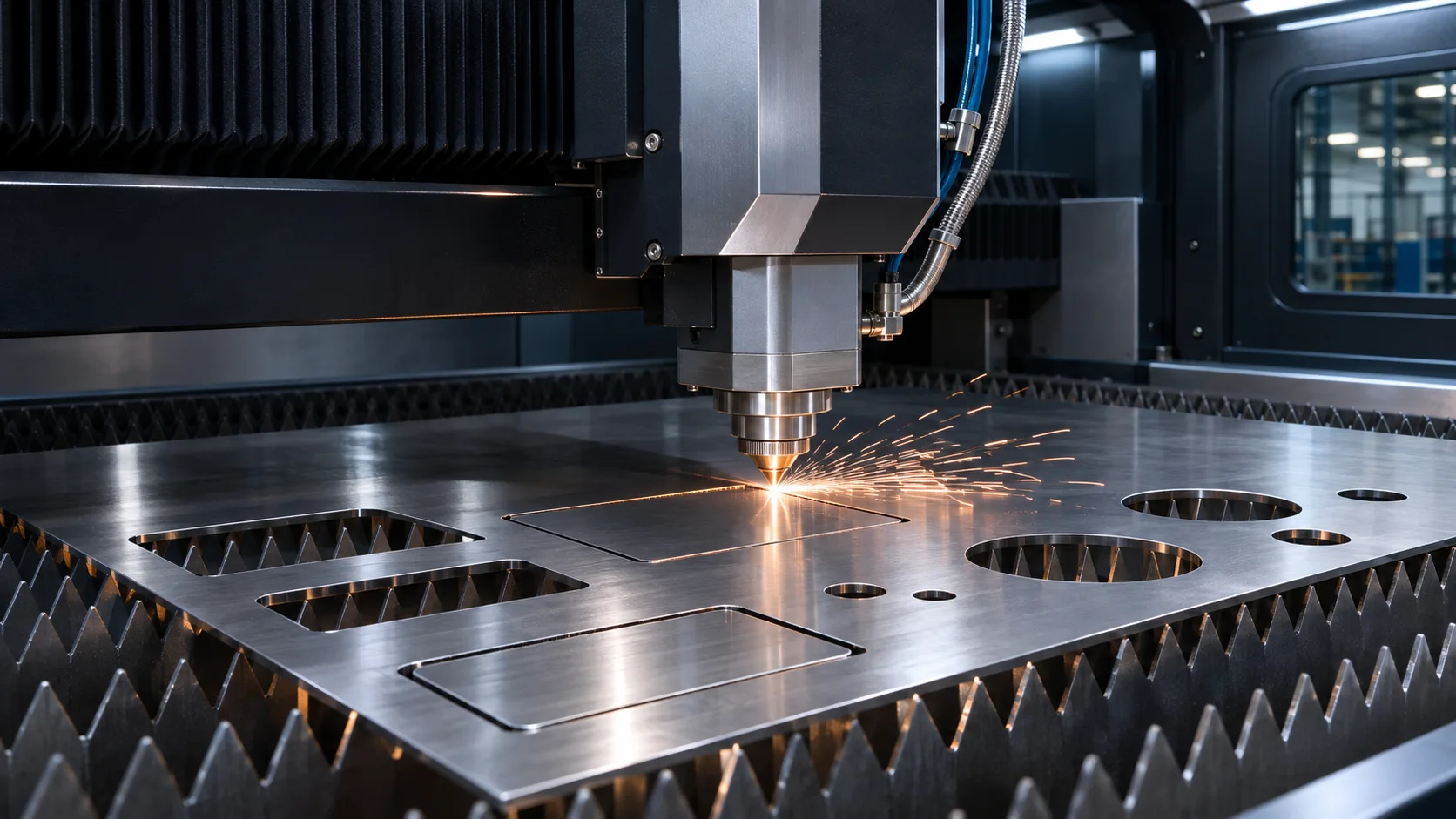
A focused beam cuts profiles, holes and slots. Material, thickness and cut-edge requirements determine suitability.
Process details ↗An arc cuts electrically conductive metals. For steel blanks and structural parts, agree on stock for secondary machining.
Process details ↗A high-pressure stream, often with abrasive, limits heat input. Specify any limits on taper, squareness and roughness.
Process details ↗| Process | Evaluate first |
|---|---|
| Laser | Small holes, narrow slots and visible edges |
| Plasma | Heat distortion, edge quality and finishing allowance |
| Waterjet | Edge taper, abrasive marks and cut time |
Feasibility, thickness, tolerances and lead time are confirmed for each drawing.
Specify grade, thickness, service conditions and any paint, plating or edge protection.
Specify grade, finish, grain direction and surfaces that need protection during handling.
Specify grade, temper and cosmetic requirements, including dimensions after finishing where needed.
Send a 1:1 DXF with units, closed profiles and no duplicate lines. Include a dimensioned PDF for tolerances and notes.
Provide the finished drawing or STEP model with bend angles, inside radii, bend direction and dimensions that must hold after forming.
Identify narrow tabs and features likely to deform. Agree whether critical holes need machining after forming.
Agree on envelope dimensions, hole positions, bend angles, burr limits, coatings and inspection records.
Equipment housings, control panels, covers and guards.
Gussets, mounting tabs, fixture plates and machine brackets.
Check fit on prototypes before approving the drawing revision for a batch.
A DXF defines cut geometry. Include material, thickness, quantity and finish. Bent parts also need a finished-part drawing.
Consider material, thickness, accuracy and acceptable heat input. Tolerix can discuss options after reviewing the drawing.
Specify where to remove burrs and include coating type, colour and masking requirements.
Open an email draft and attach DXF, PDF and STEP files as available.